Ed-Tech Collaboratory States Convene in Madison to Advance School-to-Workforce and AI Strategy
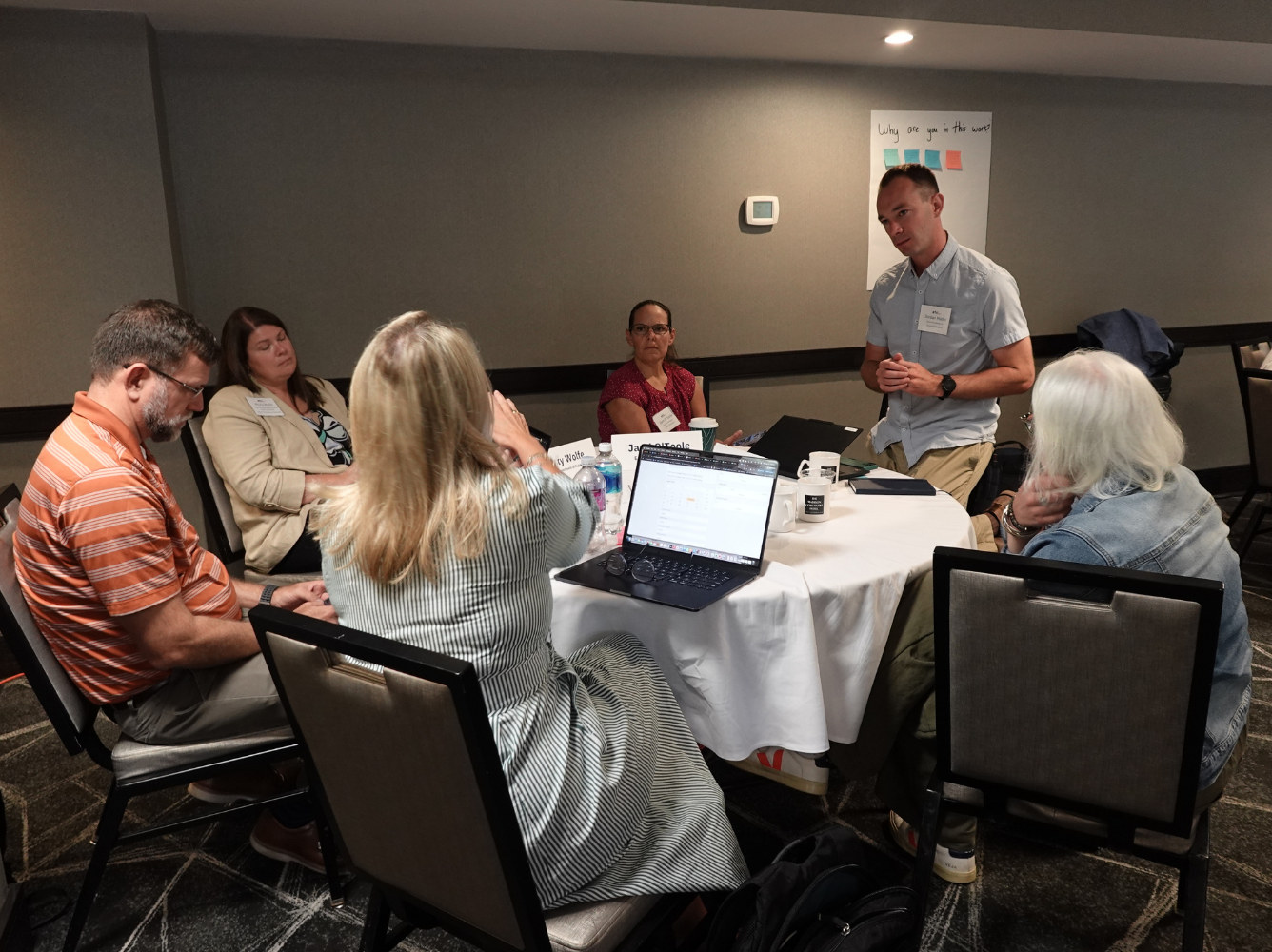
Last week, state education technology leaders from across the Ed-Tech Collaboratory gathered in Madison, Wisconsin for two days of shared strategy, questions, and state-by-state discussions of the challenges these leaders face in making technology work for those who rely on it the most – school administrators, educators, policymakers, and families. Leaders from Delaware, Georgia, Indiana, Minnesota, North Carolina, South Carolina, Texas, and Wisconsin, met, shared insights, and created action plans around next steps.
The convening brought together the challenge ETC is trying to untangle – how every state is solving a version of the same problem, but no two states are solving it the same way. Day One brought all attendees together to build a shared understanding of ETC’s school-to-workforce strategy — where discussions about transcripts, work records, volunteer hours, and more can better align to support students after high school. Participants then moved into an action-based session where they modeled how students move from K-12 into postsecondary education and the workforce. States compared notes on shared challenges, tested early prototypes and technical hypotheses in working labs, and surfaced the governance questions that come with building infrastructure meant to serve many states at once.
“Every state in that room is managing its own pressures and its own timeline, but the work only holds up if we’re building shared infrastructure, not forty parallel versions of the same solution,” Silvia Brunet-Jones, VP of Implementation and Services at Education Analytics, and co-author of the ETC’s Assessment Vendor Playbook, said. “Our time together fortified the idea that governance is what lets states trust the systems they’re building together.”
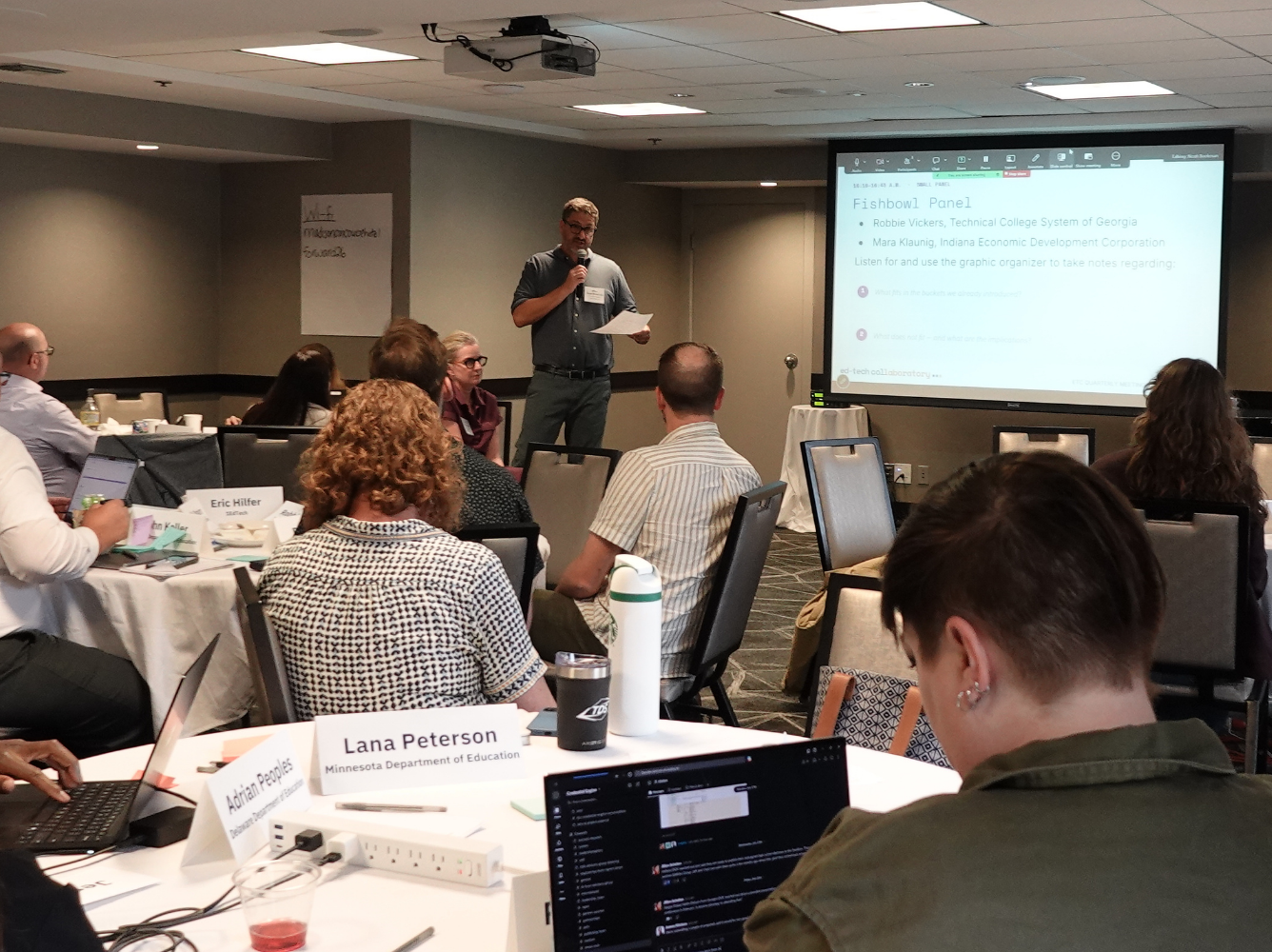
The state teams ran through planning sprints to define their own goals and systems, then built 90-day action plans with clear next steps and specific requests of ETC. The day closed with both groups reconnecting to harvest cross-state patterns and match shared needs to available resources and partners.
“The action-oriented work is exactly what brought me to the ETC,” Lucas Munz, Chief Information Officer with the Wisconsin Department of Public Instruction, and ETC Advisory Board member, said. “My team left with clear guidance on how we can safely and effectively navigate the complex needs of our data infrastructure, because we’ve seen how other states have managed it and learned best practices from one another.”

Sharing strategy, then state-specific translation, then reconnection is at the center of how ETC works. ETC member states will share more of their advancements at the Ed-Fi Alliance Summit in November.
Learn more about the Ed-Tech Collaboratory’s work at https://www.edtechcollaboratory.org/our-work-overview.